 Reviews


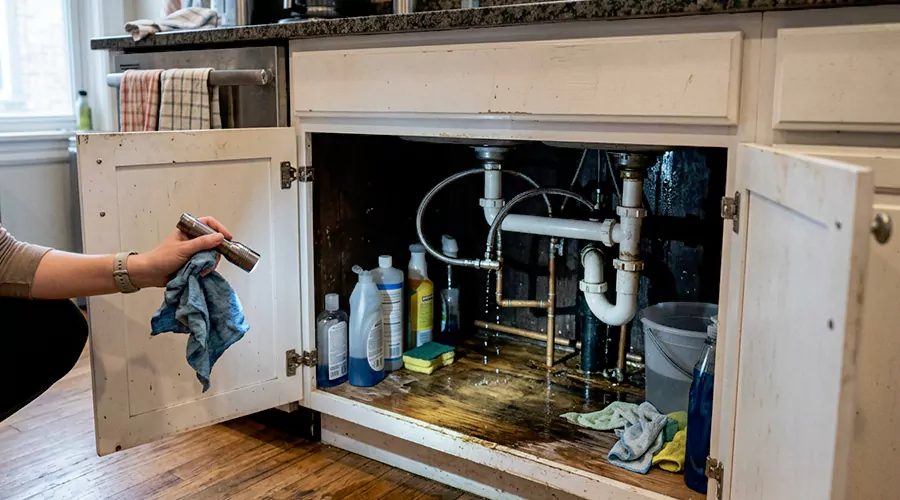
A leak under a kitchen sink comes from either the water-supply side or the drainage side in most cases. Professional sink repair costs about $220 to $660 in 2026, while isolated pipe leaks can start around $150 to repair. The supplied keyword leak under kitchen sink has 5,000 average monthly searches. This guide focuses on tracing an unexplained puddle when the exact source is not yet obvious.
What Can Leak Under a Kitchen Sink?
The under-sink cabinet contains several separate water paths. Faucet supply hoses carry pressurized water. The basket strainer and P-trap carry wastewater. A garbage disposal or dishwasher can add more connections that can leak.
- A leak can start at a shutoff valve.
- It can come from a flexible hose.
- Drain connections can also fail.
- The faucet base can send water through the countertop opening.
- A disposal connection adds another possible source.
This is why puddle location alone is unreliable. Trace moisture upward before deciding which part to replace.
How Can You Separate a Supply Leak From a Drain Leak?
A supply leak can occur while the sink is unused because the water lines stay pressurized. A drain leak usually appears while water is passing through the waste piping. This timing difference is one of the fastest diagnostic tools available.
- Leave the sink unused for ten minutes.
- Check for fresh water.
- Then run the faucet.
- Inspect again.
- Fill the sink afterward.
- Release the water.
- Watch all drain joints.
A leak that begins during the first test points toward the supply side. A leak that begins only during drainage points toward the waste side.
How Does a Hidden Sink Leak Progress?
A small leak can remain unnoticed because the cabinet hides it. Repeated wetting can soften cabinet material before a visible puddle reaches the kitchen floor.
| Stage | What Happens | Main Concern | 2026 Cost Exposure |
|---|---|---|---|
| Early | Small damp area | Washer or fitting | Often simple repair |
| Repeating | Cabinet remains wet | Ongoing leak | $220 to $660 sink work |
| Hidden | Material swells | Water damage | Additional restoration cost |
| Severe | Pipe or valve fails | Rapid water loss | $150 to $4,700 pipe repair |
Pipe leak repair averages about $500 in 2026. The reported range is $150 to $4,700 because hidden access can add substantial work. Finding the leak before cabinet damage spreads keeps the repair more focused.
What Warning Signs Should You Check?
An under-sink leak often leaves evidence before you see active dripping. The cabinet can develop odor or visible changes after repeated moisture.
- The cabinet floor feels damp.
- Stored paper products become wet.
- A musty odor develops.
- The cabinet base begins swelling.
- White deposits form around plumbing joints.
- Rust appears on metal fittings.
- Water shows up after using the dishwasher.
- The P-trap stays wet after sink use.
- A shutoff valve has fresh moisture.
- Water reaches the kitchen floor.
Current 2026 leak guides identify swollen cabinet materials and mineral deposits as useful clues of an ongoing under-sink leak. The strongest clue is still the first connection that becomes wet during testing.
Could the Faucet Be Causing the Leak?
Yes. Water from a faucet can travel through its mounting opening and enter the cabinet. A faucet supply connection can also leak beneath the countertop.
- Dry around the faucet base.
- Run the faucet.
- Move the handle through its normal range.
- Use the sprayer if one is installed.
- Check underneath.
- Watch both flexible supply hoses.
- Water near the faucet base can travel downward before becoming visible.
- Do not assume the nearest drain pipe caused the puddle.
The supplied keyword kitchen faucet leaking belongs to this specific source.
Could the P-Trap Be the Source?
The P-trap is a frequent source because several removable joints are located beneath the sink. A loose slip nut or damaged washer can let water escape each time the sink drains.
- Place a bucket below the trap.
- Dry all joints.
- Fill the sink.
- Release the water.
- Watch each connection.
- A joint that becomes wet should be inspected.
- Hand-tightening can correct a slightly loose slip nut.
- Replace a worn washer rather than forcing the fitting tighter.
The supplied keyword under sink plumbing applies directly to this accessible pipe assembly.
Can a Blockage Cause the Leak?
Yes. A partial blockage can keep more water inside the drain piping for longer periods. Weak slip joints can then begin dripping under conditions that did not previously expose the problem.
- Watch the sink speed.
- Gurgling suggests restricted flow.
- A slowly emptying basin deserves inspection.
- Clear the obstruction before repeatedly tightening leaking joints.
- A leak combined with a slow sink can indicate two connected problems.
The supplied keyword kitchen sink drain pipe fits this deeper waste-side condition.
Can the Sink Overflow Pipe Leak?
Some sinks have an overflow opening connected to a small pipe beneath the rim. A damaged overflow fitting can leak inside the cabinet even though the main drain appears normal.
- Fill the sink carefully.
- Watch the water level.
- Do not intentionally flood the basin.
- Inspect the overflow connection while water approaches the opening.
- A worn washer or damaged overflow tube can leak into the cabinet.
This source is easy to miss because the overflow line is not used during normal low-water operation.
What Is the Best DIY Leak Test?
The most useful DIY test is a staged inspection using dry tissue. It lets you isolate pressurized plumbing from drainage plumbing without taking anything apart.
- Clear the cabinet.
- Dry every fitting.
- Wrap tissue around the shutoff valves.
- Wrap another piece around each slip joint.
- Wait with the faucet off.
- Check the tissue.
- Then run water.
- Fill and drain the basin.
- Inspect again.
Current June 2026 leak-detection guidance recommends isolating water and drying the area before tracing the first fitting that becomes wet.
When Should You Call a Professional?
Professional help is appropriate when the leak continues with the water supply isolated or the failed pipe is difficult to access. Widespread cabinet damage also deserves attention because the plumbing repair may no longer be the only work required. Sink installation or repair commonly costs $220 to $660 in 2026. General plumber work averages $341.
Professional diagnosis makes sense when:
- The shutoff valve itself leaks.
- A supply line has a pinhole.
- A pipe is cracked.
- Water has reached flooring.
- The exact source cannot be found.
- Mold or major cabinet damage is visible.
A hidden pipe repair can cost more when walls or flooring need access.
How Can You Prevent Another Under-Sink Leak?
Under-sink leaks are easier to catch when the plumbing remains visible. Avoid packing the cabinet so tightly that pipes cannot be inspected.
- Look inside every few months.
- Check after moving stored items.
- Keep heavy bottles away from drain pipes.
- Feel around shutoff valves.
- Inspect after disposal work.
- Respond to damp odor quickly.
A regular visual check costs nothing. The alternative can include cabinet repair on top of the plumbing bill.
Conclusion
A leak under kitchen sink plumbing should be traced by testing the supply side and drain side separately. Water that appears while the sink is unused points toward pressurized plumbing. Water that appears only during drainage usually comes from waste connections. Check appliance hoses separately. If the source remains hidden or a valve cannot stop the water, professional diagnosis can prevent a larger repair.
Frequently Asked Questions
Why is there water under the sink only in the morning?
A slow supply leak can collect overnight. Appliances can also drain during delayed wash cycles.
Can a loose drain nut create a puddle?
Yes. A small slip-joint leak can release water every time the sink drains.
Why does the leak stop when I stop using the sink?
That pattern points toward the drain side rather than a continuously pressurized supply connection.
Can a leaking sink cause mold?
Long-term moisture can support mold growth inside a dark cabinet.
Why does water appear after the dishwasher runs?
The dishwasher drain hose can leak or send water into a restricted shared drain.